
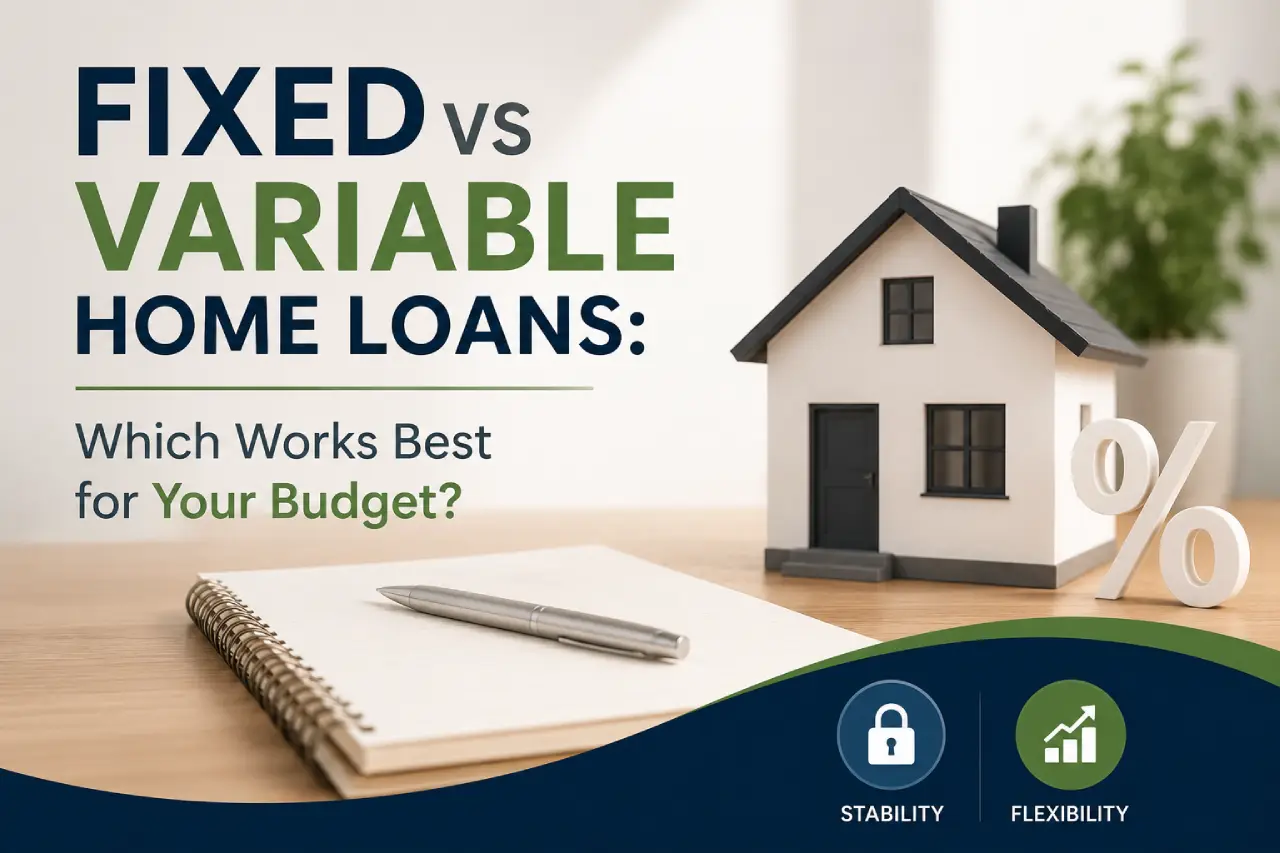
Buying a home means taking out a mortgage—that’s just a big loan you borrow from a bank. You agree to pay it back, bit by bit, over many years, plus the extra cost, which is the interest. The main thing you need to decide is how that interest works: Do you want a fixed rate that stays the same for stability, or a variable rate that might go up or down? Choosing the right one is less about math and more about your personal peace of mind and what risks you’re comfortable taking over the life of your home.
Choosing the Right Home Loan
When you take out a home loan, you are effectively borrowing a substantial amount of money and committing to repay it over a predetermined length of time, plus interest. The two primary categories of loans are distinguished by the kind of interest rate: fixed or variable. Your personal risk tolerance, financial objectives, and forecasts for the market movement of home loan interest rates will all determine which loan is ideal for you.
Fixed vs Variable Home Loans: Pros and Cons
The debate between fixed and variable home loans often centres on stability versus flexibility. Let’s break down the advantages and disadvantages of each.
Fixed-Rate Home Loans
Your interest rate on a fixed-rate home loan is established for a predetermined period of time, typically one to five years.
- Pros:
- Budget Certainty: Regardless of market conditions, your repayments stay the same. This gives you peace of mind and makes budgeting simple.
- Defence Against Rate Increases: You save money since your rate remains the same even if home loan interest rates climb dramatically.
- Stability: Provides financial certainty, which is frequently preferred by people on first-home buyer loans or with lower budgets.
- Cons:
- Missed Savings: You won’t profit from a drop in home loan interest rates.
- Less Flexibility: Fixed loans may feature more stringent conditions, such as restrictions on additional repayments and high break penalties if you wish to transfer or pay off the loan early.
Over the course of a variable-rate house loan, the interest rate may fluctuate, usually in accordance with changes in the market, such as modifications to the Reserve Bank’s official cash rate.
- Pros:
- Benefit from Rate Drops: You can save money on repayments if the market rate drops.
- Flexibility: Attractive features like offset accounts, redraw capabilities, and the option to make limitless additional repayments without incurring penalties are typically offered by variable loans.
- Lower Initial Rate: At first, variable rates are frequently marginally less than equivalent fixed rates. For many borrowers, it is a strong contender for the best home loan options because of these advantages.
- Cons:
- Repayment Uncertainty: Your budget will be strained if the market rate increases because your repayments will rise as well.
- Budget Volatility: Makes long-term, accurate budgeting more difficult.
Understanding Fixed, Variable, and Split Home Loans
You can choose a split home loan in addition to the standard fixed vs. variable home loans. This provides a compromise by enabling you to split your loan into fixed and variable portions.
- A fixed portion gives you the assurance that a portion of your loan will be repaid steadily.
- Variable Portion: Enables you to profit from any future rate reductions on the remaining portion and utilise flexible features like an offset account.
For those who desire some flexibility and access to variable features along with a certain level of security, a split loan may be one of the best home loan options. A split option offers a great balance for risk management when selecting a house loan.
How to Decide Which Home Loan Type is Right for You
The ultimate decision between fixed vs variable home loans hinges on your personal financial situation and philosophy.
- Your Budget Comfort Level: The stability of a fixed interest rate mortgage is priceless if you have a limited household budget and are unable to handle an unexpected increase in repayments. You might favour a variable rate to pursue possible savings if you have a large amount of disposable income and a high tolerance for risk.
- Market Outlook: Do you think home loan interest rates will go up or down in the next few years? Fixing your rate now could save you a lot of money if you expect an increase. But nobody can accurately forecast the market.
- What Features Are You Looking for? Do you want to use an offset account to lower interest or be able to make unlimited additional repayments? A variable or split loan is a far better option than a pure fixed-rate mortgage if flexibility is crucial. The flexibility of an offset account on a variable loan can be a useful tool for individuals looking for first-time home buyer loans in order to pay off the debt more quickly.
- How long do you intend to keep the loan? Be exceedingly cautious when using fixed rates if you intend to sell or refinance within a few years because the break costs might be very high.
Finding the best house loan ultimately comes down to striking a balance between security and flexibility. The best strategy is to thoroughly consider the advantages and disadvantages of fixed vs variable home loans in relation to your particular financial situation.
Ready to choose your home loan? Compare competitive fixed vs variable interest rates and find the best option for your budget. Contact us Today
Frequently Asked Questions:
How can I get an instant home loan in Australia?
Since house loan interest rates and terms necessitate a thorough financial evaluation, “instant” approval is uncommon. By having all required paperwork (payslips, tax returns, savings) ready for submission, you can expedite the procedure (24- 48-hour pre-approval is feasible).
How can I apply for and be granted a home loan in Australia?
Comparing the best house loan alternatives, completing an application with supporting documentation, getting pre-approved, locating a property, and obtaining final approval following valuation are all steps in the process. This is greatly streamlined and made simpler by a mortgage broker.
How do I know if I’m eligible for a fixed-rate mortgage?
Eligibility for a fixed interest rate mortgage is assessed similarly to a variable loan, focusing on your stable income, credit history, and deposit size. Lenders use serviceability criteria to ensure you can afford the repayments, even under stress testing.
What is the best home loan option for first-time buyers?
The “best” option varies, but first home buyer loans often combine government grants with specific structures. A split loan or a low introductory variable rate can be excellent starting points, balancing initial cost with repayment flexibility.